Depending on what bothers you about the scar, Dr. Rodriguez will suggest a customized plan to address the principal problem. This may or may not include scar revision: cutting out the old scar and carefully re-stitching the skin closed.
Surgical scar revision is not always the answer. Both surgical and nonsurgical options exist to improve scars. For example, to improve hyperpigmentation or hypervascularity, Dr. Rodriguez may recommend topical medication or laser treatment rather than surgical scar revision.
Model
What Are the Different Types of Scars?
The two most common types of raised scars are keloid scars and hypertrophic scars, each with distinct characteristics that influence how they are treated.
Understanding the type of scar you have is the first step in choosing the most effective treatment.
Type of Scar
What It Is
Keloid Scar
A thick, overgrown scar caused by an aggressive collagen response. It extends beyond the original wound edges and may appear as if it is “spilling over” the scar boundary. More common in patients with darker skin tones and often seen on the ears or chest.
Hypertrophic Scar
A raised, thick scar that remains within the original boundaries of the incision or injury. It may feel firm and appear prominent but does not extend beyond the original wound. More common than keloids, especially after surgery.
How Is a Surgical Revision Done?
If the scar is relatively small, it can often be treated under local anesthesia. During the procedure, the scarred tissue is carefully removed, and the surrounding skin is gently released to reduce tension on the closure.
Dr. Rodriguez then meticulously re-approximates the skin edges using precise suturing techniques to create a thinner, more refined scar. If sutures need to be removed, this typically occurs within about one week after surgery.
After the procedure, it is important to allow the incision to heal fully before starting any topical scar treatments. This healing phase usually takes 1 to 3 weeks, depending on the scar’s location.
Why Choose Dr. Rodriguez?
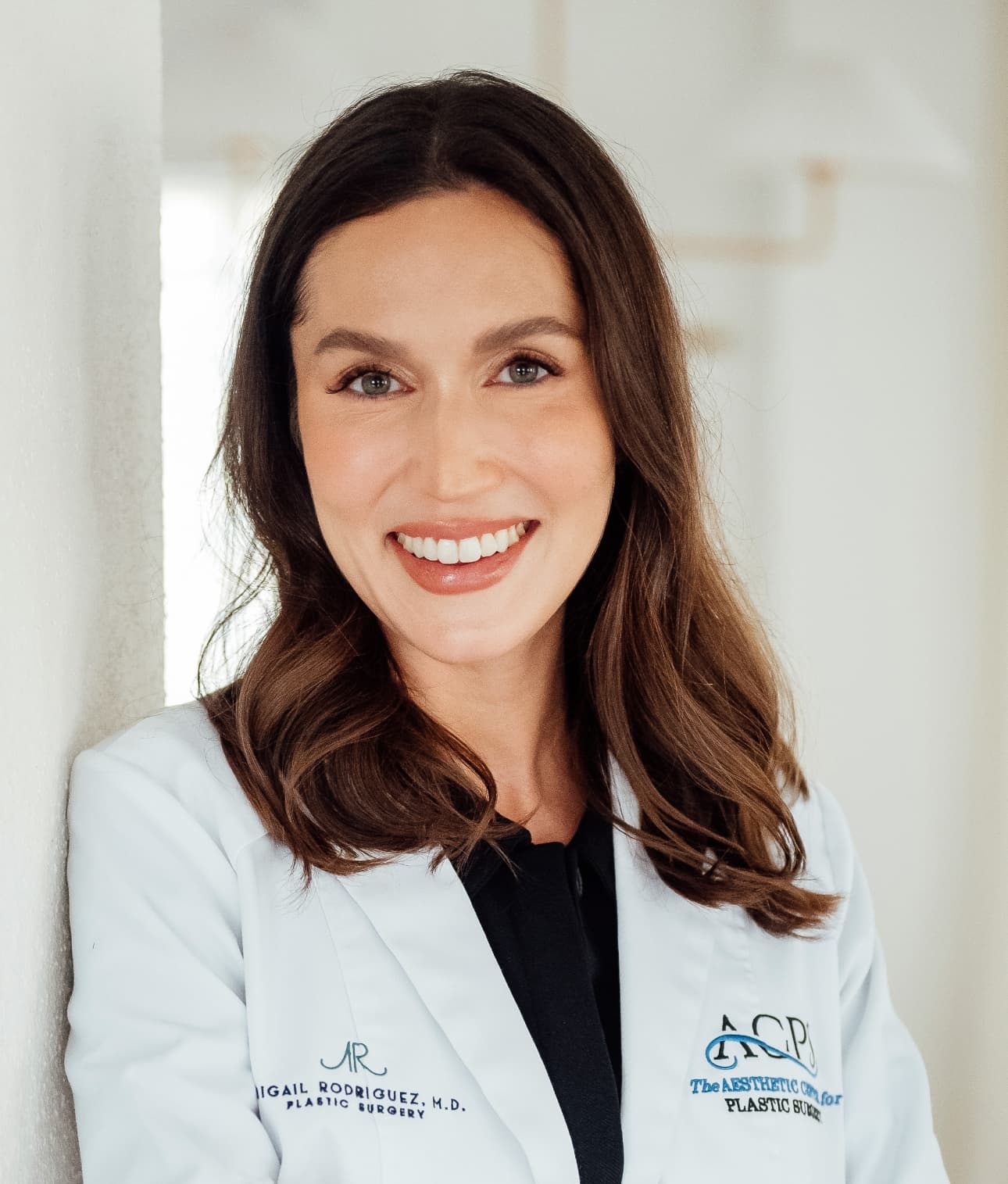
Dr. Abigail Rodriguez blends advanced surgical expertise with refined artistry to create results that look natural, balanced, and enduring. Known for her compassion, transparency, and commitment to patient education and safety, she provides individualized care supported by a state-of-the-art facility, enhanced recovery protocols, and comprehensive follow-up—all designed to ensure you feel cared for, confident, and understood throughout your transformation.
Widely regarded as a top board-certified plastic surgeon in Houston and beyond, Dr. Rodriguez's excellence has been recognized by Newsweek as one of America's Best Plastic Surgeons and by Texas Super Doctors multiple times. She is trusted for her meticulous precision and genuine dedication to helping patients look and feel their most authentic and confident.
What Is Dr. Rodriguez’s Approach to Complex Scars?
For more challenging or high-risk scars—such as thick, recurrent, or cosmetically sensitive scars—Dr. Rodriguez uses a comprehensive, proactive strategy designed to optimize healing and minimize recurrence.
Her approach may include:
Advanced Tension-reduction Devices (Brijjit®)
These help offload tension from the incision, which is one of the most important factors in preventing scar widening or thickening.
Medical-grade Scar Therapy (BioCorneum®)
A silicone-based treatment with SPF that helps regulate collagen production and protect the healing scar.
Silicone Taping (Sylke® tape)
Provides consistent support to the incision while helping flatten and soften the scar over time.
Specialized Suturing Techniques
Multi-layered, meticulous closure techniques are used to precisely align the skin and reduce tension at every level.
Early Suture Removal
Sutures are often removed as early as safely possible to reduce inflammation and minimize track marks.
Targeted injections (steroids and 5-FU)
These medications may be injected before and after revision to control excessive collagen production and reduce the risk of hypertrophic or keloid scarring.
By combining surgical precision with advanced postoperative scar management, Dr. Rodriguez takes a proactive approach to achieving smoother, less noticeable results, even in complex cases.
Model
Flexible Financing For Every Budget
Paying for your procedure shouldn't stand in the way of feeling confident and comfortable in your skin. We offer flexible financing options, including CareCredit® and PatientFi®, to help make your treatment more manageable and accessible.
Our team will guide you through your options and support you during every step of your transformation.
If you have a scar (and you are lucky with your genetics!), it may fade significantly over time to the point where it is barely visible. However, it will never be totally gone.
There is no laser, surgery, or medication that can remove a scar entirely.
A Reputation Built on Results
Hace seis semanas me realicé una abdominoplastia y un aumento de senos con la Dra. Abigail Rodríguez,...
Aracely Benitez
Dr Rodriguez is so kind and honest with her assessment. I also appreciate the efficiency of the office.Everyone...
Gini Crawford
Thanks to Dr. Abigail Rodriguez. I first met her in 2021 for a small surgery on my forehead, and the...
Carla Daniela Sine
I highly recommend Dr. Abigal Rodrigues with my eyes closed. She is an excellent surgeon—from the very...
Don’t hesitate to contact us if you’re interested in learning more about a scar revision. Our skilled team is dedicated to providing excellent cosmetic services to Houston and the surrounding area. We’re here to help you achieve a look that will help you feel more comfortable in your body.