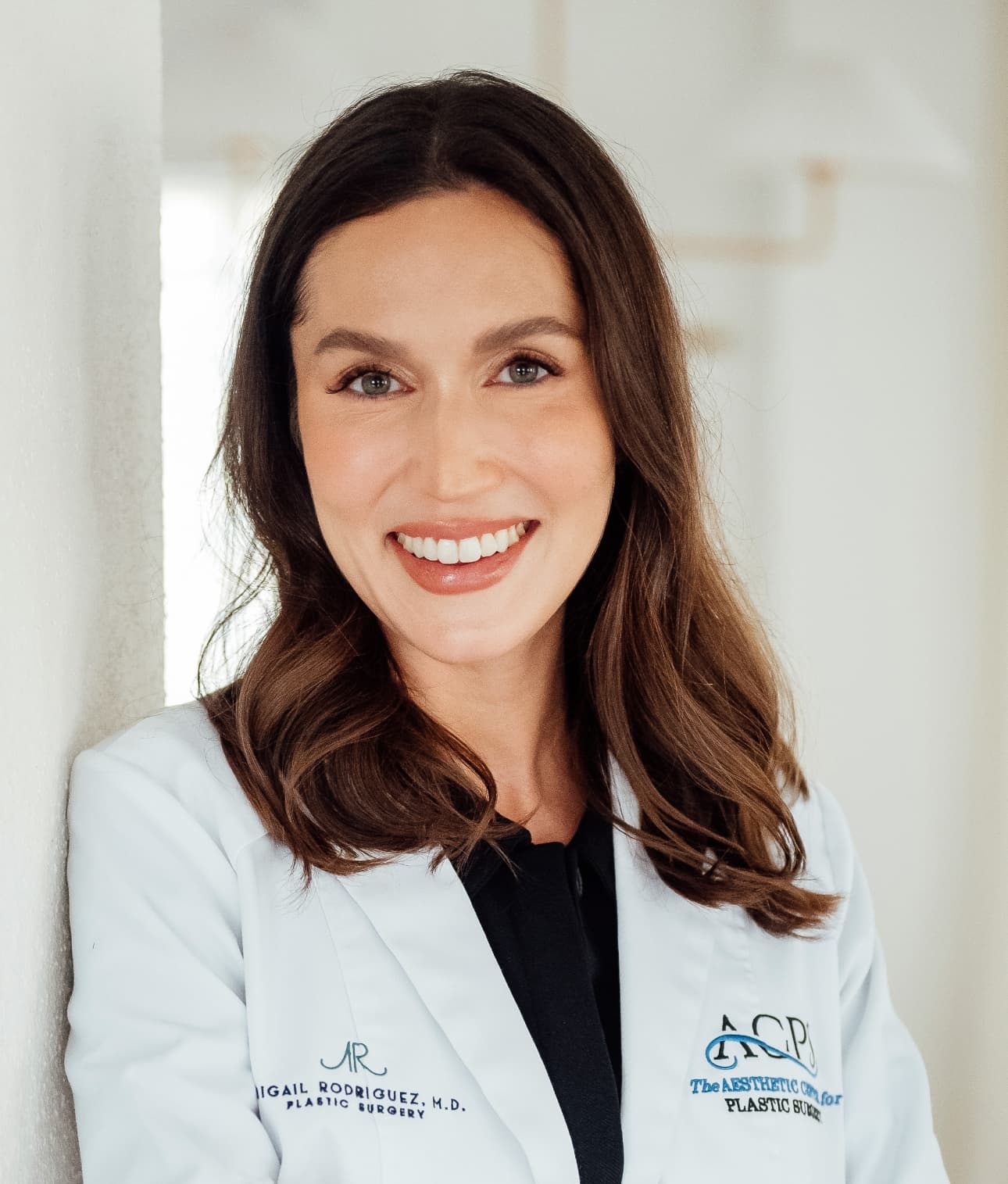
Dr. Abigail Rodriguez is proud to be a participating surgeon in this Clinical Study. This important research is evaluating a new treatment option for patients experiencing capsular contracture after breast augmentation. If you’ve experienced complications from implants and think you may be a candidate, this is an opportunity to receive advanced care with the support of cutting-edge technology.
Capsular contracture is the most common reason for reoperation after breast implant surgery. It occurs when the scar tissue that naturally forms around a breast implant tightens, causing the breast to feel firm, look misshapen, or even become painful. Capsular contracture is graded from mild (Grade I/II) to severe (Grade III/IV). Patients with Grade III or IV often require breast revision surgery.
What is the Study Device?
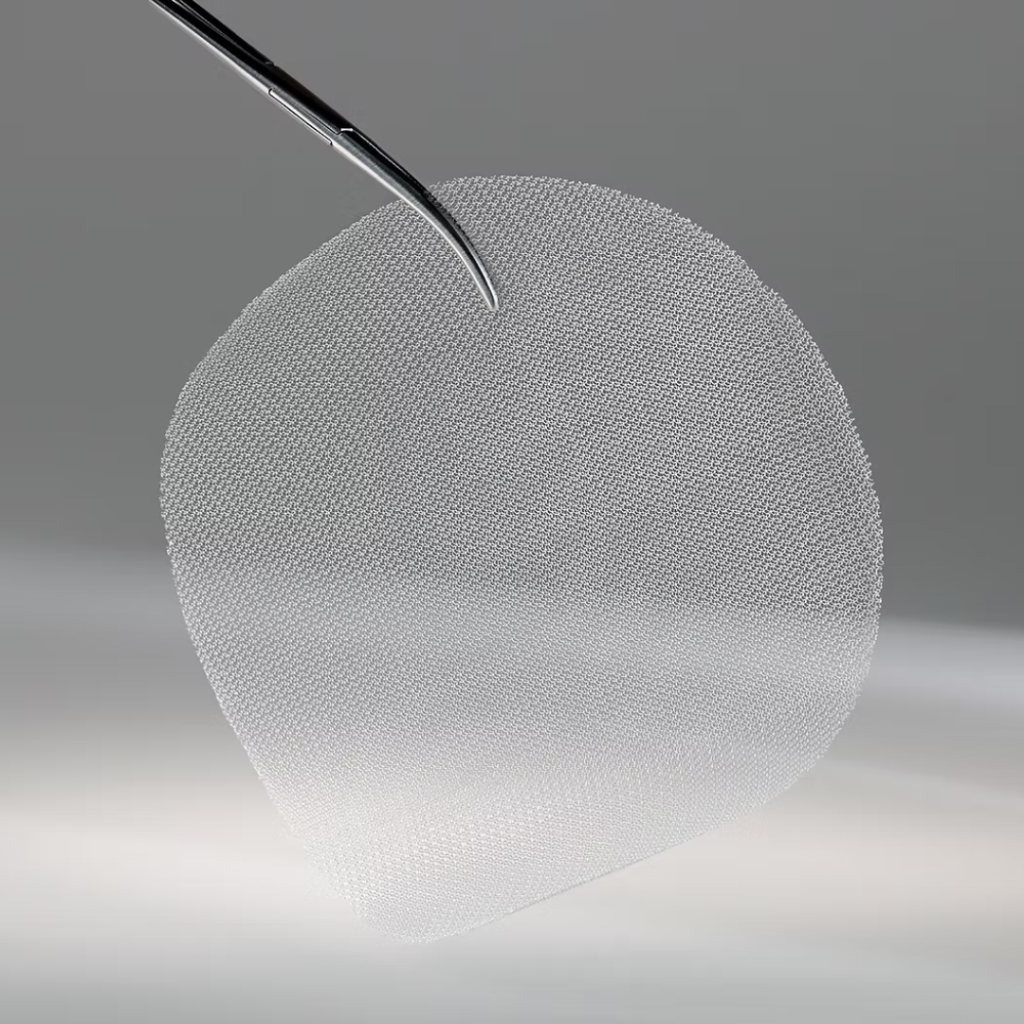
The device used in the study is a resorbable mesh made from P4HB, a biologically derived polymer. This device is used to provide temporary support and stability to the smooth silicone breast implant during revision surgery for capsular contracture, with the goal of reducing recurrence.
The study is being conducted at multiple sites across the U.S. to determine the safety and effectiveness of the study device in treating capsular contracture. Dr. Abigail Rodriguez and her team are actively enrolling qualified candidates to participate.
Who is a Candidate?
Are female, age 22–66
Have capsular contracture (Baker Grade III or IV)
Desire a new implant with no more than a ±150cc volume change
Are able to comply with the required follow-up visits for 24 months
Who is Not a Candidate?
BMI below 18 or above 35
Implant size greater than 800cc
History of breast cancer, chest radiation, or certain autoimmune conditions
Recent nicotine use, active infections, or systemic illness
Plans for additional elective breast surgery during the study period
Benefits for Study Participants
Patients are eligible for potential benefits, including:
Surgery fees waived (excluding anesthesia and facility fees)
Study device [provided at no cost]
Compensation for follow-up visits when completed as requested
By joining this study, you not only receive access to an advanced treatment option for capsular contracture, but you also play an important role in helping shape the future of breast implant revision surgery and top-rated breast surgery.
Dr. Abigail Rodriguez blends advanced surgical expertise with refined artistry to create results that look natural, balanced, and enduring. Known for her compassion, transparency, and commitment to patient education and safety, she provides individualized care supported by a state-of-the-art facility, enhanced recovery protocols, and comprehensive follow-up—all designed to ensure you feel cared for, confident, and understood throughout your transformation.
Widely regarded as a top board-certified plastic surgeon in Houston and beyond, Dr. Rodriguez's excellence has been recognized by Newsweek as one of America's Best Plastic Surgeons and by Texas Super Doctors multiple times. She is trusted for her meticulous precision and genuine dedication to helping patients look and feel their most authentic and confident.
Breast Asymmetry (when one breast has a different size, volume, position, or form from the other)
Allergic Reaction to materials used to manufacture the mesh including kanamycin and tetracycline that might lead to serious health issues
Allergic reaction to betadine (a solution used to clean the pocket.) in patients with a hypersensitivity to betadine
Breast/Nipple Sensitivity Change (a change in what or how much you feel on/in your breast or nipple)
Capsular Contracture (when the scar tissue around the implant constricts)
Breast Deformity (when the breast does not have a normal or typical shape)
Erosion (breakdown of the outer layers of the skin)
Erythema (abnormal redness of the breast)
Explanation: Implant + Scaffold (when the implant and the remaining scaffold need to be surgically removed)
Scaffold Extrusion (when the scaffold becomes exposed when the incision doesn’t close correctly)
Hematoma (collection of blood in tissues like a very bad bruise)
Imaging artifact(s) (when something is seen in a radiology picture (like an x-ray) that might make the picture difficult to interpret)
Impaired Wound Healing (when one or more issues leads to delayed wound healing)
Implant rupture / Silicone bleed (when the implant breaks open and/or silicone leaks out)
Infection
Inflammation (swelling)
Implant Malposition (the implant not being in the right place / out of place)
Necrosis (dead or dying tissue)
Pain
Ptosis (drooping or sagging of the breast)
Skin Rash / Red Breast Syndrome (when the skin is red and inflamed; abnormal redness of the breast that can look like a skin infection)
Scaffold / implant malposition (the implant or the scaffold not being in the right place / out of place)
Scaffold palpability (being able to feel the scaffold through the skin)
Scaffold visibility (being able to see the scaffold through the skin)
Seroma (a collection of fluid under the skin usually near the incision)
Soft Tissue Defect
Wound dehiscence (when the surgical wound partially or completely opens)
There may be other potential unknown risks associated with the surgical procedure or study device such as the safety and effectiveness device usage in proximity to existing or excised cancer or the impact on breast feeding.
There is a potential unknown impact on the ability to detect breast implant rupture, breast cancer, or other breast diseases.
A Reputation Built on Results
Hace seis semanas me realicé una abdominoplastia y un aumento de senos con la Dra. Abigail Rodríguez,...
Aracely Benitez
Dr Rodriguez is so kind and honest with her assessment. I also appreciate the efficiency of the office.Everyone...
Gini Crawford
Thanks to Dr. Abigail Rodriguez. I first met her in 2021 for a small surgery on my forehead, and the...
Carla Daniela Sine
I highly recommend Dr. Abigal Rodrigues with my eyes closed. She is an excellent surgeon—from the very...
If you’re experiencing capsular contracture after a previous breast augmentation, you may be eligible to participate in our clinical study. This is an opportunity to receive advanced care supported by cutting-edge technology.
The next step toward improved comfort and confidence is determining if you’re a candidate. We encourage you to explore your candidacy further.
Paying for your procedure shouldn't stand in the way of feeling confident and comfortable in your skin. We offer flexible financing options, including CareCredit® and PatientFi®, to help make your treatment more manageable and accessible.
Our team will guide you through your options and support you during every step of your transformation.
Participants will be followed closely for 24 months to ensure the best possible outcomes. Required visits include:
Post-Operative Visit (approx. 90 days post-op) – In-person exam, photos, and review of healing progress
6-Month Phone Visit – Virtual check-in to document healing, side effects, or life changes
12- and 24-Month Follow-Ups – In-person exams, breast imaging, questionnaires, and documentation of results
Additional follow-up may be requested if necessary for safety or regulatory purposes.
Enroll Today!
If you believe you may qualify for this study, we invite you to schedule a private consultation with Dr. Abigail Rodriguez. She will review your case, explain the study in detail, and determine if you’re an eligible candidate.
Take the first step toward relief from capsular contracture and explore this innovative treatment option with Dr. Rodriguez today.