Breast implants are designed to be durable, but they are not considered lifetime devices. That doesn’t mean they automatically need to be replaced after 10 years, either. Many women can enjoy their implants considerably longer without problems.
The breast implant lifespan varies between patients and depends on the implant, your anatomy, changes to your breasts over time, and whether complications develop. Rather than planning on replacement at a specific time, I recommend monitoring your implants and breasts over time and addressing them when there is a medical or cosmetic reason to do so.
How Long Do Silicone Breast Implants Last?
There really isn’t a specific timeframe. Modern silicone implants can remain intact and look good for many years, but the risk of rupture and other complications increases as implants age.
Today’s highly cohesive silicone gel implants, often called “gummy bear” implants, are also different from earlier generations of implants. The gel is designed to hold together even if the outer shell develops a rupture. This means a rupture may not cause an obvious change in the appearance or feel of the breast.
I offer several implant options for breast augmentation, including advanced Motiva® breast implants. Implant selection is individualized based on your anatomy, aesthetic preferences, and long-term goals.
WARNING:
This feature contains nudity. Please click OK to confirm you are at least 18 years of age and are not offended by such material.


How Long Do Saline Breast Implants Last?
Like silicone implants, saline implants don’t come with a predetermined expiration date. They can remain intact for many years, although their shells can eventually weaken or rupture.
The difference is that saline implant rupture is easy to recognize. If the shell develops a leak, the sterile saline is absorbed safely by the body, and the affected breast typically deflates noticeably. With silicone implants, you may experience a “silent rupture,” which is why periodic imaging is important.
Do You Have To Replace Breast Implants Every 10 Years?
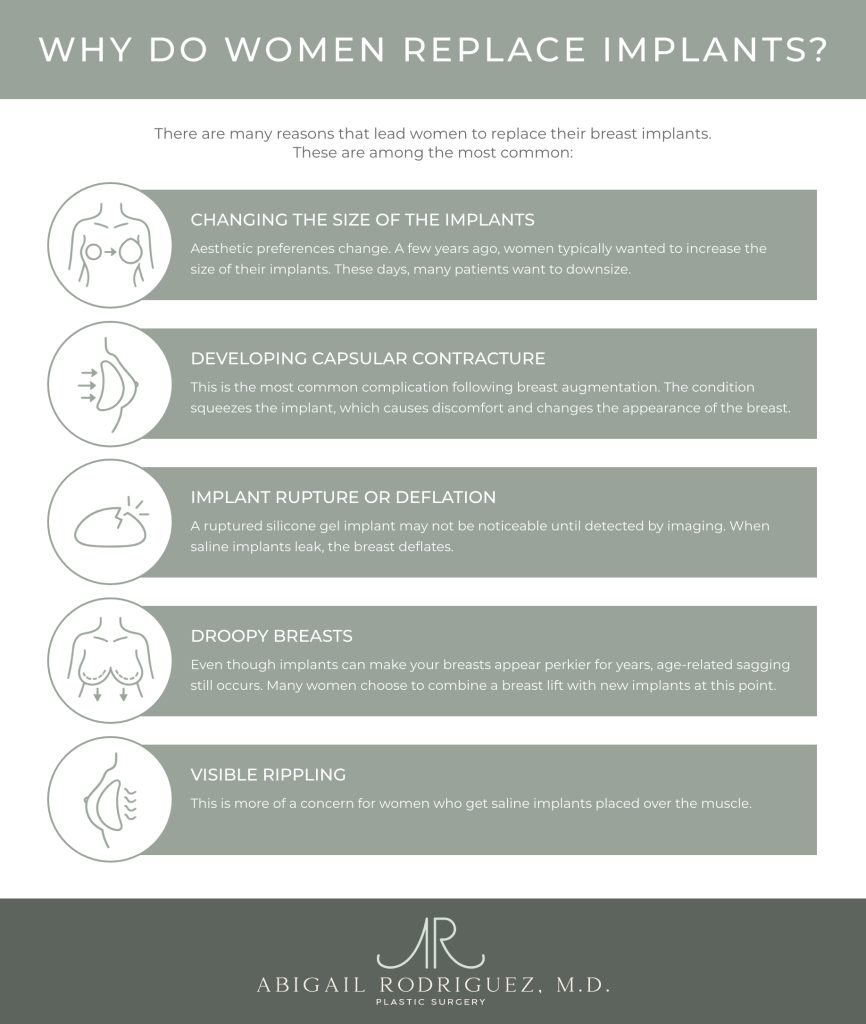
No. The idea that all implants must be replaced every 10 years is outdated. Most women have to replace their implants at some point, but I don’t recommend surgery solely because an implant has reached a particular age.
Replacement or breast implant removal may be appropriate if an implant ruptures or if you develop capsular contracture, discomfort, implant displacement, or another complication. Some women choose revision surgery because their aesthetic preferences have changed or because pregnancy, breastfeeding, weight fluctuations, or aging have changed their breasts.
If your implants are intact, your breasts remain soft and comfortable, and you’re happy with their appearance, there may be no reason to replace them simply because 10 years have passed.
Monitoring Silicone Breast Implants Is Important
Because silicone implant ruptures can occur without noticeable symptoms, I recommend routine imaging to evaluate implant integrity. Following FDA guidance, I recommend having a high-resolution ultrasound of the breast implants beginning 5 years after breast augmentation and then every 2 years after that.
This imaging is different from routine breast cancer screening. Mammograms and breast tissue ultrasounds are not designed to specifically or reliably evaluate the integrity of silicone breast implants. You should continue recommended breast cancer screening based on your age, health history, and physician’s guidance, while also getting the appropriate implant-specific imaging.
If you notice a change in breast shape, firmness, swelling, pain, or another unusual symptom, don’t wait for your next routine imaging study. Contact your plastic surgeon for an evaluation.
Can Surgical Technique Affect Long-Term Results?
The implant itself is only one part of a long-lasting breast augmentation result. Your natural tissues continue to age, stretch, and respond to gravity over time, so how the implant is selected, positioned, and supported matters.
My approach to cosmetic breast surgery emphasizes thoughtful implant selection and long-term tissue support. For appropriate patients, I may use GalaFLEX™ mesh in breast surgery to provide an internal scaffold that reinforces breast tissue as it heals.
I also offer Preservé® breast augmentation, a tissue-preserving approach using Motiva implants that minimizes disruption of the breast’s natural support structures to help support stable, natural-looking results over time.
Think in Terms of Monitoring, Not an Expiration Date
Breast implants don’t suddenly expire at 10 years. Instead, think of them as medical devices that require lifelong awareness and appropriate follow-up.
If you’re considering getting breast implants, you can request a consultation using the online form or by calling our practice at (713) 352-3199.
Leave a Reply