One bra cup size generally corresponds to roughly 150 to 200 cubic centimeters (CC) of breast implant volume, but that number is an approximation, not a formula. The relationship between cc and cup sizes is far more nuanced than a simple conversion chart, and understanding why can help you make a more informed decision when exploring breast augmentation.
Why the CCs-to-Cup-Size Conversion Isn’t Exact
The gap between “how many CCs” and “what cup size you’ll be” comes down to variables that are different for every patient. Bra cup sizes aren’t standardized across manufacturers; a C cup from one brand can fit very differently than a C cup from another. Your starting breast tissue volume also plays a major role: two patients receiving identical implants can land in entirely different cup sizes simply because they’re starting from different baselines.
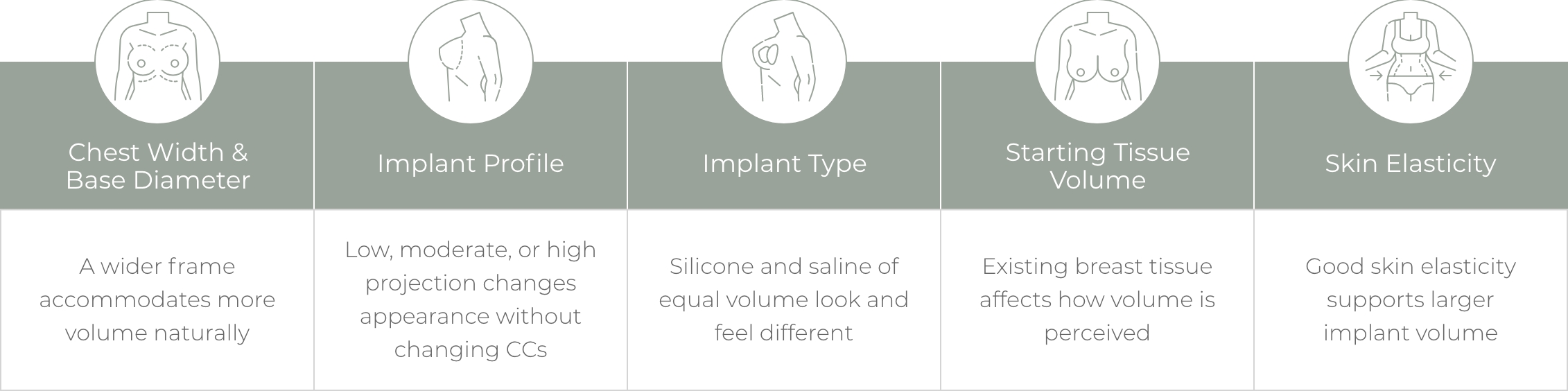
Other factors that influence the final cup size include:
- Chest width and breast base diameter: A wider chest accommodates more volume before a size change becomes dramatic.
- Implant profile: How far an implant projects forward (low, moderate, or high profile) affects apparent size without necessarily changing the implant volume.
- Implant type: Silicone and saline implants of the same volume can look and feel different on the body.
- Skin elasticity and existing tissue: More tissue coverage tends to create a softer, more natural appearance at any given volume.
No two bodies respond to the same implant the same way, which is exactly why experienced surgeons don’t size by cup size alone.
How Surgeons Actually Think About Implant Volume
In my practice, the conversation about implant size isn’t really about cup sizes at all—it’s about proportion. The most important measurement is your breast base width, which is the natural diameter of your breast from the inner to outer edge. That measurement helps determine the range of implant sizes that will fit your frame without looking out of proportion or causing complications down the road.
From there, we consider implant profile. Two implants with the same CC volume but different profiles will create noticeably different results. A higher-profile implant projects from the chest more and creates more visible fullness, while a lower-profile implant spreads more naturally across the chest wall. The right profile depends on your anatomy, your aesthetic goals, and the look you’re after—whether that’s subtle enhancement or a more noticeable change.
The goal is always balance. A well-chosen implant should look like it belongs on your body.
WARNING:
This feature contains nudity. Please click OK to confirm you are at least 18 years of age and are not offended by such material.


How To Choose the Right Implant Size
Choosing your implant size is one of the most personal decisions in the entire process, and it deserves more than a quick answer. Here’s how to approach it thoughtfully:
- Think in proportions, not numbers. Rather than fixating on a specific cup size or CC count, focus on how you want to look in the mirror and in your clothes. Bring reference photos to your consultation; they communicate far more than a number.
- Consider your lifestyle. High-impact activity, body type, and even your wardrobe preferences all factor into which size will work best for you in the long term.
- Try implant sizers. Many surgeons, myself included, use physical sizers—small implant-shaped bags you can slip into a bra—to help you visualize different volumes on your body before committing.
- Ask about going too large and too small. Both carry tradeoffs. Oversized implants can lead to long-term tissue changes and a higher revision rate. Undersized implants may leave you wanting more. Your surgeon should walk you through both scenarios honestly.
The best size is the one that fits your frame, matches your vision, and holds up well over time.
Breast Augmentation Options at My Practice
Understanding how CCs translate into real-world results is just the beginning. At my practice, I offer traditional breast augmentation using silicone or saline implants. I also offer Preservé® breast augmentation: an advanced, tissue-preserving approach using Motiva® implants that prioritizes long-term support, natural softness, and sensation. For patients interested in modest, natural-looking volume without implants, breast augmentation with fat grafting is another option worth discussing at your consultation.
Every surgical plan I create is customized to your anatomy, your goals, and the results you want to carry with you for years to come.
Take the Next Step
If you’re beginning to research breast augmentation and want to understand what size might be right for your body, a personalized consultation is the best place to start. Call my office today at (713) 352-3199 or request a consultation using the online form.
Leave a Reply