Immediately after surgery, breast reduction scars appear as thin, pinkish or reddish lines that gradually flatten, lighten, and soften into the surrounding skin. The exact pattern and length of your scars depend on the surgical technique used and how your body heals.
As a board-certified plastic surgeon recognized as one of the “Top 10 Best Reviewed Plastic Surgeons in Houston, TX” for natural-looking results, I combine precise technique with meticulous incision placement to minimize scarring and support the smoothest healing possible.
WARNING:
This feature contains nudity. Please click OK to confirm you are at least 18 years of age and are not offended by such material.


What Are the Two Main Breast Reduction Scar Patterns?
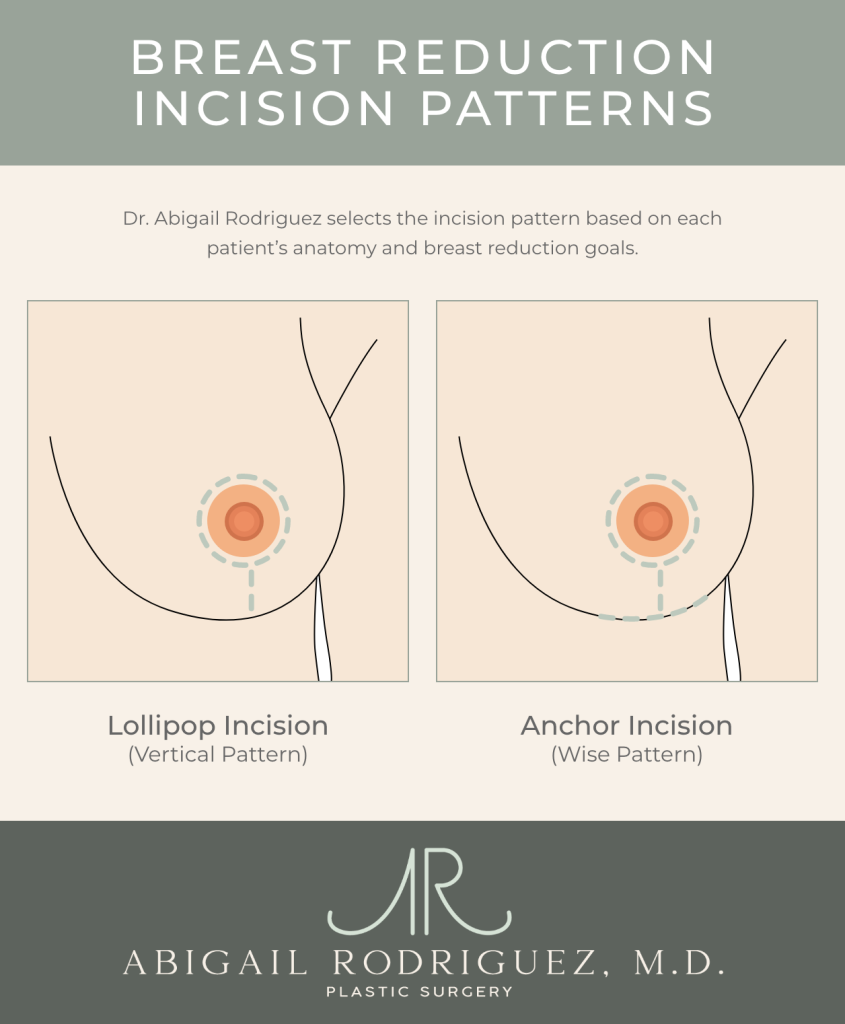
The two main breast reduction scar patterns are the vertical (“lollipop”) pattern and the Wise (“anchor”) pattern, and I choose between them based on each patient’s anatomy and reduction goals:
- Vertical (“lollipop”) pattern: A scar circles the areola and runs straight down to the breast crease. I most often choose this technique because it typically produces a shorter scar with excellent shape and lift.
- Wise (“anchor”) pattern: This includes the same scar as the vertical pattern, plus an additional horizontal line along the crease beneath the breast. I reserve this approach for women who need a more significant reduction or lift, since the extra incision allows me to remove tissue and reshape the breast more effectively.
During your consultation, I thoroughly explain the technique I recommend for your anatomy and goals. This approach helps ensure that you feel empowered and informed during every stage of surgery, from consultation through recovery.
Does Breast Reduction Leave Scars?
Yes. Any breast reduction surgery that removes tissue and repositions the nipple requires incisions, and incisions become scars. There’s no version of breast reduction, which is typically combined with a breast lift (mastopexy), that avoids scarring entirely. However, I’ve found that scar placement, size, and long-term appearance vary significantly based on surgical technique and how well a patient follows her healing plan. I make sure every patient understands this trade-off clearly before we move forward together.
What Do Healed Breast Reduction Scars Look Like? Healing Stage by Stage
Healed breast reduction scars gradually fade from red or pink to thin, pale lines over the course of about a year. While healing varies from patient to patient, here’s a general idea of what you can expect during each stage of recovery.
- Weeks 1–6: During early healing stages, scars are red or pink, slightly raised, and may feel firm or tight to the touch. Some swelling and sensitivity are normal as incisions close. I check in closely with patients during this window.
- Months 2–5: Throughout this transitional phase, redness gradually softens to pink or light brown. Scars are still visible but noticeably less raised. Itching or tightness typically eases.
- 6+ months: Color continues to fade toward pink or light brown, and scars flatten significantly. There are pronounced visible improvements by this stage, though some texture may persist.
- 1 year+: Scars mature into thin, pale lines that are close to your natural skin tone. They won’t vanish completely, but they’re usually far less noticeable than patients expect, often blending into bra lines and areola borders.
I share detailed, individualized protocols so you feel supported and confident at every step of recovery, and my team and I are always available to assist with postoperative questions or concerns.
How Can I Help My Scars Fade?
Silicone sheeting, sun protection, and a gradual return to activity are the most effective ways to help breast reduction scars fade. I give every patient a personalized plan built around these core recommendations:
- Silicone sheeting or gel: Start applying silicone sheeting or gel once incisions are fully closed to support smoother, discreet healing.
- Sun protection: UV exposure can darken healing scars and slow fading, so I advise covering or shielding scars for at least a year.
- Gradual return to activity: Avoid putting tension on incisions by slowly transitioning back to underwire bras and exercise, as directed.
Most of the above guidelines also apply to my male breast reduction patients to ensure they similarly have a successful healing journey with optimal results.
When Should I Be Concerned About My Scars?
Most scars heal predictably, but some patients develop thick, raised, or widened scars due to:
- Genetics or skin type
- Tension on the incision during healing
- Complications like infection or delayed wound healing
If a scar isn’t softening the way we expected after a year, or its appearance is bothersome, I encourage you to contact me. We’ll explore whether scar revision makes sense for you and what it can realistically achieve. Together, we’ll decide on the right next step.
What’s the Bottom Line on Breast Reduction Scars?
Breast reduction scars are permanent, but they fade substantially over the first year and are typically well hidden by bra lines and natural breast contours. I’ve found that for most of my patients, the relief from pain and improved proportion far outweighs the visible trade-off of a well-healed scar.
Additionally, my team and I are with you throughout the entire process, from your first consultation through your final follow-up, offering attentive, ongoing support.
If you’re considering breast reduction, the next best step is to request a consultation at my Houston practice to discuss your goals and explore your options. Please complete the online form or call us today at (713) 352-3199.
Leave a Reply